Analyzing the Security of Satellite-Based Air Traffic Control
Presents an in-depth security analysis of the satellite ADS-C aviation protocol, demonstrating message injection and position tampering using SDRs.
Summary
Role of ADS-C in Oceanic Air Traffic
Automatic Dependent Surveillance–Contract (ADS-C) is a satellite datalink protocol utilized by air traffic control to monitor aircraft operating over oceanic and remote regions where terrestrial radar is unavailable.
Capturing and Decoding Satellite Telemetry
Using custom software-defined radio (SDR) receivers, researchers captured and decoded over 120,000 real-world ADS-C satellite messages, evaluating protocol structure and security properties.
Transmitter Implementation and Injection Attacks
Because ADS-C lacks cryptographic authentication, researchers constructed an SDR-based transmitter capable of crafting arbitrary uplink and downlink messages, altering reported aircraft positions, and forging flight contracts.
Assessment of Mitigations for Satellite Avionics
Evaluating potential countermeasures highlights the urgent need to introduce message authentication and encryption standards across satellite-based air traffic management networks.
Related talks
Creator Stage·25 min
Avinash Srinivasan · Brien Croteau
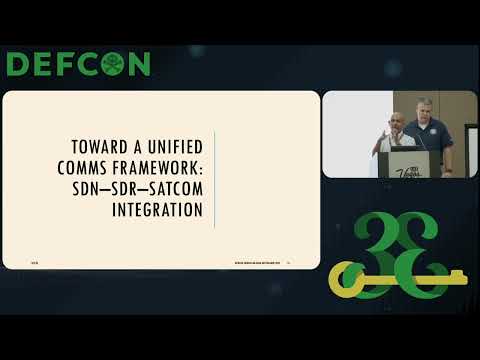
Presents an SDN and SDR-driven cross-layer framework utilizing SATCOM infrastructure for resilient, reconfigurable communications across autonomous vessels.

Creator Stage·26 min
G. Longo · V. Lenders
Demonstrates practical RF attacks against TCAS II collision avoidance systems to forge resolution advisories and disable collision detection.

Creator Stage·20 min
Angelina Tsuboi
Details Fly Catcher, a low-cost Raspberry Pi and RTL-SDR device that uses a convolutional neural network to detect spoofed ADS-B aircraft signals.