Inside Monero
Inside Monero
Summary
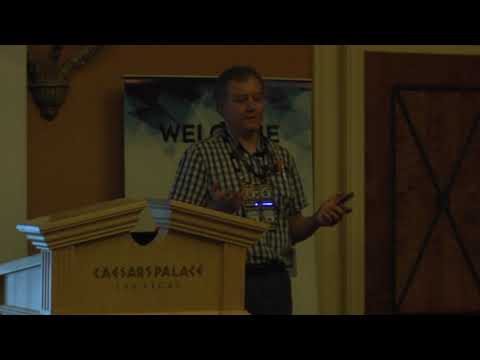
### Architecture and Cryptography of Monero At 00:00, Howard Chu, CTO of Symas Corporation and core Monero developer, delivers an in-depth architectural breakdown of the Monero cryptocurrency protocol at the Monero Village. Chu explores the cryptographic primitives that establish private digital transactions.
### Proof-of-Work Consensus and Decentralized Mining At 09:47, Chu compares Monero's proof-of-work algorithm with Bitcoin and alternative consensus mechanisms. He explains how Monero's memory-hard hashing algorithms are specifically designed to maximize performance on standard CPU cache architectures while penalizing specialized ASIC mining hardware.
### Privacy Mechanics: Stealth Addresses and RingCT At 19:49, the presentation details how Monero achieves transaction unlinkability and untraceability. Chu explains that sender identities are obscured using cryptographic ring signatures, recipient destinations are masked through one-time stealth addresses, and transaction values are hidden using Ring Confidential Transactions (RingCT).
### Slashing Blockchain Footprints with Bulletproofs At 30:30, Chu discusses the integration of Bulletproofs zero-knowledge range proofs. He details how Bulletproofs replaced bulky logarithmic range proofs, reducing Monero transaction sizes by approximately 80% and drastically improving network verification throughput and storage scalability.
### Emission Schedules and Long-Term Security Economics Concluding between 40:55 and 53:36, Chu analyzes Monero's economic model. Unlike Bitcoin's fixed supply cap, Monero implements a continuous tail emission of 0.6 XMR per block, ensuring perpetual economic incentives for miners to secure the network into the distant future.