Building a Cloud Security Flywheel: Lessons from the Field
Engineers explore architecture and security mechanisms for Building a Cloud Security Flywheel: Lessons from the Field.
Summary
## Overview
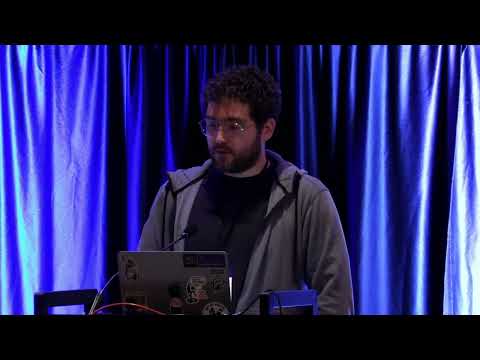
Shaun, a SANS instructor and former NSA security professional now at GitHub, presents a structured approach to building cloud security programs in existing deployments. Rather than prescribing technical solutions alone, he addresses the "it depends" problem by offering a three-stage flywheel strategy that balances security impact with organizational friction, applying lean startup methodology to cloud security implementation.
## Key Topics
**Stage 1: Low-Friction Foundations** The speaker recommends three immediate priorities: (1) Activity Logs (CloudTrail in AWS, Activity Logs in Azure) deployed across all accounts and regions to capture API management events; (2) Security tooling like GuardDuty and Defender that auto-detect threats without disrupting development workflows; (3) Storage account logging for forensic capability, framed as a policy decision requiring stakeholder documentation rather than automatic implementation.
**Stage 2: Developer Engagement** Once foundations are established, initiate conversations with development teams. First, identify and decommission unused resources (untagged VMs, orphaned storage accounts) to reduce attack surface and demonstrate cost savings. Second, audit identity access—remove unused accounts, reduce over-permissioned identities, enforce least-privilege IAM roles. Third, discover sensitive data (PII, credentials) in unexpected locations using tools like AWS Macie, establishing data classification processes.
**Stage 3: Organizational Guardrails** Implement hard controls requiring cross-functional agreement: service control policies blocking insecure deployments, mandatory golden images and infrastructure-as-code for consistent patching, network segmentation (private endpoints, bastion hosts) removing systems from the public internet. This stage tests organizational appetite for security-first deployment processes.
## Technical Details
**AWS-specific implementations**: CloudTrail for centralized activity logging via AWS Organizations; GuardDuty for threat detection across accounts; IAM Access Analyzer to detect over-privileged roles; Macie for PII detection in S3; Service Control Policies as organizational guardrails; AWS Config with Lambda for automated remediation.
**Azure-specific implementations**: Activity Logs and subscriptions as security boundaries; Defender for Cloud; Azure Policy for cross-subscription enforcement and auto-remediation; sign-in logs for identity usage tracking; limitations in native S3-equivalent logging requiring policy-based solutions.
**Key Distinction**: AWS accounts are hard security boundaries requiring per-account management via AWS Organizations; Azure subscriptions are softer boundaries with broader federation capabilities, particularly via Azure Policy.
**Cost-Benefit Strategy**: Offset increased logging and detection costs by identifying wasteful resources (unused VMs, unpatched systems, cloud sprawl), achieving cost neutrality while improving security posture.
## Takeaways
- Begin with low-friction, high-impact changes that don't disrupt existing workflows to build organizational momentum - Apply lean startup principles: test assumptions, obsess over metrics, iterate rapidly based on organizational feedback - Distinguish between technical problems (solved by frameworks and tools) and organizational friction (solved through communication, process, and phased adoption) - The flywheel effect: each successful implementation reduces friction for the next phase, accelerating security maturity - Address the "it depends" problem by providing context-specific guidance that accounts for current deployment stage (greenfield vs. brownfield), organizational structure, and risk tolerance - Make security operational through documentation, repeatable processes, and automation to ensure sustainability beyond individual implementers - Investigate environment thoroughly before imposing guardrails to understand legitimate business needs and avoid blanket restrictions
Related talks

RSAC Cybersecurity·54 min
Industry experts analyze emerging threats surrounding Webcast: Building Our Cloud Security Leaders of Tomorrow.

fwd:cloudsec·17 min
Steve Turner
Steve Turner investigates A Hero’s Guide to Building a Cloud Security Program Without a 20-Person Guild.
fwd:cloudsec·23 min
Pavel Lineitsev
Pavel Lineitsev analyzes Lessons From Building a Cloud Attack Simulation Program.