DIY Bioweapons and Regulation
Capabilities for biological weapons production in community bio labs and regulatory approaches that balance maximum innovation freedom with effective monitoring and safety.
Summary
Emerging Biotech Capabilities
Recent technological advances have dramatically reduced barriers to creating biological constructs, including engineered pathogens. What once required massive institutional resources can increasingly be accomplished in community or home bio labs with more affordable equipment.
DIY Biology and Dual-Use Technology
The same technologies enabling beneficial biohacking research—CRISPR gene editing, synthetic biology tools, DNA synthesis—can be misused to create dangerous organisms or biological weapons. This dual-use nature requires serious consideration.
Regulatory Challenges
Governments must balance innovation and freedom with biosecurity and public health protection. The speaker explores regulatory and legislative approaches that enable maximum innovation and accessibility while providing effective monitoring to prevent misuse.
Community Responsibility
The biohacking community itself plays a critical role in establishing norms, safety practices, and self-governance. The speaker emphasizes how grassroots safety culture and peer accountability are essential complements to formal regulation.
Related talks

Biohacking Village·23 min
Seth Carmody
Seth Carmody examines the structural, economic, and regulatory obstacles to achieving effective cybersecurity across the medical device ecosystem.

Biohacking Village·27 min
Mo Ali · Amy Abernethy
FDA Principal Deputy Commissioner Amy Abernethy discusses medical device cybersecurity, big data, and regulatory collaboration.
Biohacking Village·26 min
Meg Doerr
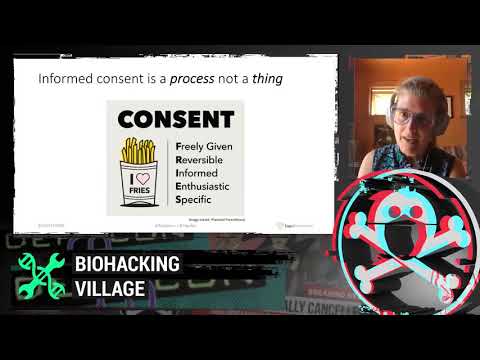
Presents a clinical framework for cybersecurity informed consent to communicate device vulnerability risks to patients.