A Hacker's Guide to Reducing Side Channel Attack Surfaces
Google researcher Elie Bursztein combines deep learning side-channel attacks with AI explainability to pinpoint and remediate cryptographic hardware leakage.
Summary
Deep Learning in Side-Channel Cryptanalysis
Deep learning models have revolutionized power and electromagnetic side-channel attacks, automating key extraction against hardware cryptographic implementations.
Applying AI Explainability to Hardware Leaks
Elie Bursztein demonstrates leveraging modern AI explainability techniques (such as Integrated Gradients and saliency maps) to inspect neural network activations.
Pinpointing Vulnerable Clock Cycles and Instructions
By visualizing which exact power trace timeframes the neural network utilizes to predict cryptographic key bits, engineers can instantly identify leaky code instructions.
Automating Hardware Defense and Hardening
Bursztein outlines automated testing pipelines for cryptographic developers to eliminate side-channel emissions before silicon fabrication.
Related talks
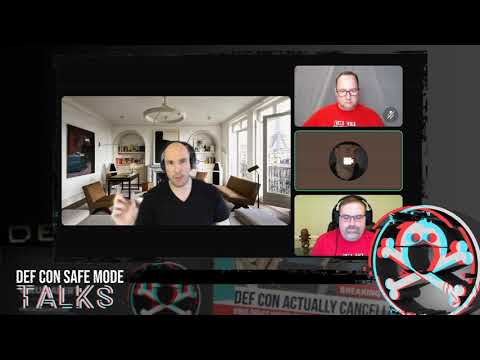
Main Stage·33 min
Elie Bursztein
Elie Bursztein discusses deep learning side-channel analysis, AI explainability tools, and hardware leak testing in a live Q&A.

Main Stage·43 min
Yaniv Balmas · Lior Oppenheim
Yaniv Balmas and Lior Oppenheim demonstrate reverse engineering KVM switch firmware, subverting the 8051 microcontroller to install an undetectable, persistent hardware keylogger.

Wireless Village·33 min
Travis Goodspeed
Travis Goodspeed provides an update on the Goodwatch open-source wrist-worn RF radio hacking and packet manipulation platform.