Secure Random by Default
Dan Kaminsky details secure Random By Default Dan Kaminsky Chief Scientist, White Ops As a general rule in security, we have learned that the best way to achieve security is to enable it by default.
Summary
Architecture and Background
Secure Random By Default Dan Kaminsky Chief Scientist, White Ops As a general rule in security, we have learned that the best way to achieve security is to enable it by default. However, across operating systems and languages, random number generation is always exposed via two separate and most assuredly unequal APIs -- insecure and default, and secure but obscure. Why not fix this?
Vulnerability Analysis
Why not make JavaScript and PHP and Java and Python and even libc rand() return strong entropy? What are the issues stopping us? Should we just shell back to /dev/urandom, or is there merit to userspace entropy gathering?
Exploitation and Demonstrations
How does fork() and virtualization impact the question? What of performance, and memory consumption, and headless machines? Turns out the above questions are not actually rhetorical.
Remediation and Defensive Strategies
Just because a change might be a good idea doesn't mean it's a simple one. This will be a deep dive, but one that I believe will actually yield a fix for the repeated *real world* failures of random number generation systems. Dan Kaminsky has been a noted security researcher for over a decade, and has spent his career advising Fortune 500 companies such as Cisco, Avaya, and Microsoft.Dan spent three years working with Microsoft on their Vista, Server 2008, and Windows 7 releases. Dan is best known for his work finding a critical flaw in the Internet’s Domain Name System (DNS), and for leading what became the largest synchronized fix to the Internet’s infrastructure of all time. Of the seven Recovery Key Shareholders who possess the ability to restore the DNS root keys, Dan is the American representative. Dan is presently developing systems to reduce the cost and complexity of securing critical infrastructure.
Related talks
Main Stage·46 min
Mark Stanislav · Zach Lanier
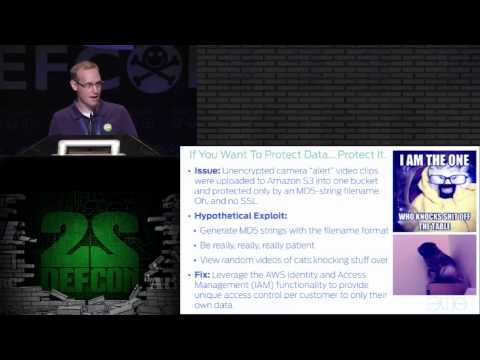
Mark Stanislav and Zach Lanier details this presentation will dive into research, outcomes, and recommendations regarding information security for the "Internet of Things".

Main Stage·51 min
Richard Thieme
Richard Thieme explores the only way to tell the truth is in fiction at DEF CON 22, examining return-oriented-programming and practical defenses.

Main Stage·49 min
Eijah
Eijah details saving Cyberspace by Reinventing File Sharing Eijah Internet access is a basic human right, due to its unparalleled capacity to deliver content and information.