Hacking Airplane A2G Systems
Analyzes vulnerabilities in airplane air-to-ground communication links using LTE-Advanced and satellite transceivers.
Summary
Air-to-Ground Communication Infrastructure
Modern commercial aircraft rely on Air-to-Ground (A2G) communication systems to transmit flight performance telemetry, airline operational data, and passenger in-flight internet traffic.
Cellular and Satellite Datalink Architecture
A2G networks utilize high-speed LTE-Advanced terrestrial cellular base stations for over-land routes and seamlessly switch to satellite transceivers when operating over oceans or remote regions.
Vulnerability Analysis in A2G Transceivers
Weaknesses in radio link authentication, protocol parsing, and transceiver handoffs present attack vectors for intercepting or disrupting communications between aircraft and ground stations.
Hardening Connected Avionics Components
Securing A2G communications requires robust network segmentation between passenger Wi-Fi gateways and core avionics buses, combined with mutual authentication across all cellular and satellite uplinks.
Related talks
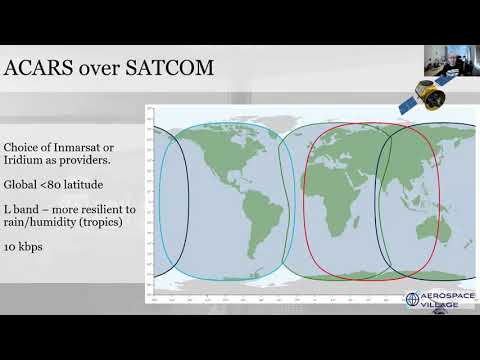
Aerospace Village·26 min
Alex Lomas
Introduces the ACARS protocol, demonstrates live message decoding with an RTL-SDR, and reviews risks in CPDLC datalinks.

Fortinet·9 min
Engineers explore architecture and security mechanisms for FortiExtender Cellular Failover Demo | 5G/LTE Wireless WAN.

War Stories·43 min
Tracy Mosley
Tracy Mosley traces the generational evolution of cellular networks from 2G to 5G, breaking down core network topologies, attack surfaces, and protocol vulnerabilities.